
TABLE OF CONTENTS
A fabric sofa takes more daily wear than almost anything else in the home: meals, pets, children, and the oils from hands and hair on the arms and headrests. Most of it can be cleaned at home. The usual mistake is using too much water, or the wrong product for the fabric, which leaves rings, faded patches or a sofa that stays damp for days.
Whether you call it a sofa or a couch, the first step is the same: find the cleaning code.
Start With the Cleaning Code
Most sofas have a care label under the seat cushions, on the underside of the frame or on the back. It usually carries one of these codes:
| Code | What it means | What you can use |
|---|---|---|
| W | Water-based cleaning | Water-based upholstery cleaners, used sparingly |
| S | Solvent cleaning only | Water-free upholstery solvents, no water |
| W/S or SW | Either method | Water-based or solvent cleaners |
| X | Vacuum or brush only | No liquid cleaners at all |
If there is no label, check the manufacturer’s or retailer’s website, or treat the sofa as the most delicate case and test everything on a hidden spot. Which? has a guide to sofa care if you would like more detail on fabrics.
What You Will Need
- A vacuum cleaner with an upholstery tool and a crevice tool
- A soft brush, or a rubber glove for pet hair
- Clean white microfibre cloths
- An upholstery cleaner that suits your code or, for W fabrics, a few drops of clear washing-up liquid in a bowl of warm water
- A spray bottle and a second bowl of clean water for rinsing
- Bicarbonate of soda, if the sofa needs freshening
How to Clean a Fabric Sofa, Step by Step
- Take off the cushions and vacuum everything, running the crevice tool along the seams and down the sides where crumbs collect.
- Brush the fabric in one direction to loosen dust and hair, especially on textured fabrics and velvet.
- Test your cleaner on a hidden area, such as the back or underneath, and let it dry to check for colour change or rings.
- Treat individual stains first, blotting from the outside in. Our stain-by-stain guide covers the most common ones.
- Clean the whole surface panel by panel, not just the dirty spots, so you do not end up with one clean patch that stands out. Mist or wipe lightly with a damp cloth and never soak the fabric.
- Go over each panel with a cloth dampened in clean water, then blot with a dry cloth to lift any residue.
- Let the sofa dry with the windows open or a fan running. Keep it away from radiators, heaters and hairdryers, which can shrink fabric and leave marks.
- Once it is dry, brush the pile back into place and put the cushions back, turning them to spread the wear.
For S-code fabrics, replace the panel-by-panel clean and the rinse with a solvent upholstery cleaner applied as the label says. For X-code fabrics, stop once the sofa has been vacuumed and brushed.
Can You Wash Removable Covers?
Only if the label says so. Many sofa covers have zips for fitting rather than washing, and a machine wash can shrink them or change their colour, so a washed cover no longer matches the arms and back. If washing is allowed, wash all the covers together on the setting given and put them back on while they are slightly damp, so they stretch into shape.
Common Sofa Problems and How to Deal With Them
Water marks and rings
Rings form when a damp spot dries from the edges inwards, carrying dirt and minerals to the edge. On W fabrics, lightly dampen the whole panel from seam to seam with distilled water, blot it evenly and let it dry with good airflow so it dries at the same rate. On other fabrics, leave this to a professional.
Pet hair and smells
A damp rubber glove or a window squeegee drawn across the fabric pulls up hair better than most vacuum tools. For general smells, sprinkle bicarbonate of soda, leave it for a few hours and vacuum it up thoroughly. If a pet has had an accident on the sofa, use an enzyme cleaner as you would on a carpet; our pet urine guide explains why ordinary cleaners leave the smell behind.
Greasy arms and headrests
The darker, shiny patches where hands and heads rest are body oils. On W fabrics, a little washing-up liquid in warm water, applied with a cloth and blotted, breaks them down. Cleaning these areas regularly stops the build-up becoming permanent.
Food and drink spills
Treat them as you would on a carpet: lift any solids, blot, start with cool water and use the right product for the stain and the fabric code.
How Often Should You Clean a Sofa?
Vacuum it once a week, deal with spills as they happen and wipe the arms and headrests regularly. A deeper clean is worth doing when the fabric looks dull or greyish, when the arms no longer match the colour of the back, or when the sofa holds on to smells. Homes with pets and young children usually reach that point sooner.
When to Call a Professional
Some sofas are better left to a professional: velvet, linen, silk, viscose and chenille, anything labelled S or X, sofas with large or old stains, and fabrics where water rings have already formed.
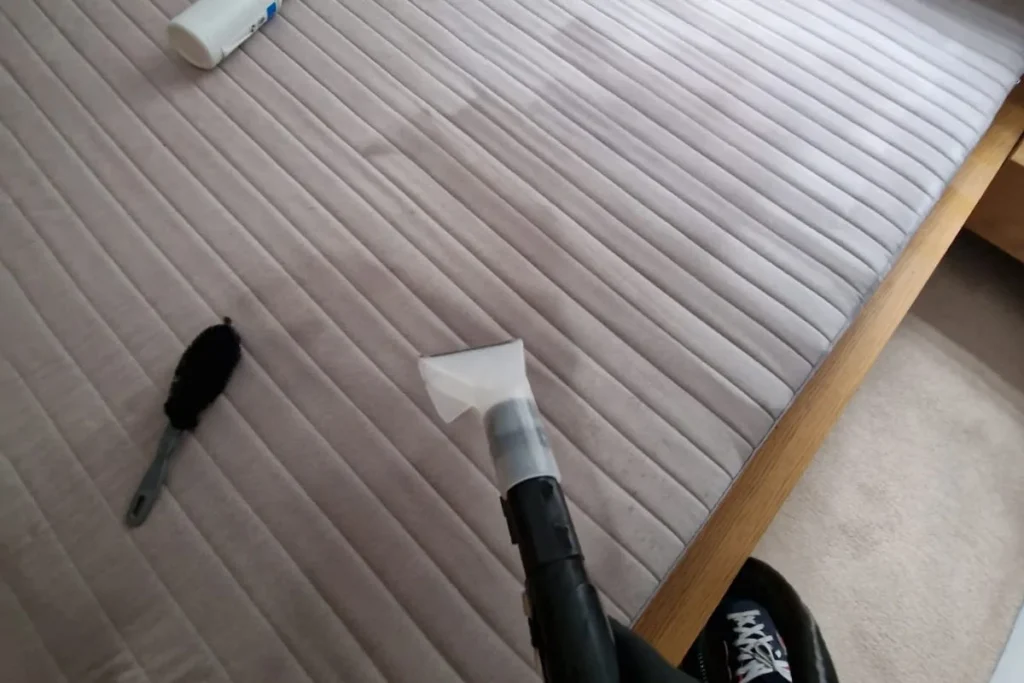
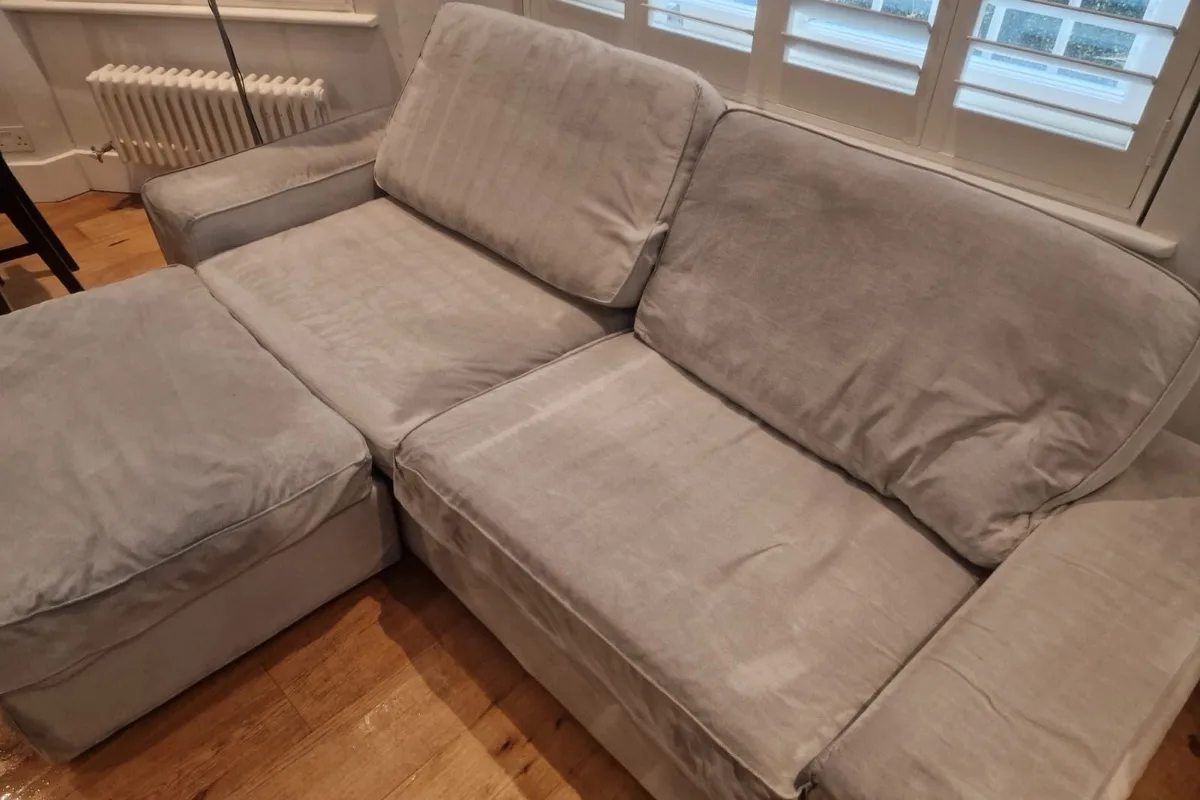
We clean upholstery and sofas across London with both hot water extraction and low-moisture cleaning. We read the care label and look at the fabric first, then choose the method: low-moisture for fabrics that react badly to water, and extraction for those that can take it and need a deeper clean. Our products are safe for children and pets once dry, and the same team also cleans carpets, rugs and stairs in the same visit if you need it.
Fabric Sofa Cleaning FAQs
Can you steam clean a fabric sofa?
Only if the code is W or W/S, and with care. Too much heat or water can shrink the fabric, leave rings or soak the foam, which then takes a long time to dry. Test first, keep the fabric only lightly damp and dry it quickly. Do not use steam on S or X fabrics.
How long does a fabric sofa take to dry after cleaning?
After a light clean at home, a few hours with good ventilation is usual. A deeper wet clean can take longer, depending on the fabric, the filling and the airflow in the room. Low-moisture cleaning dries faster.
Does bicarbonate of soda freshen a sofa?
Yes, for mild odours. Sprinkle a thin layer over dry fabric, leave it for a few hours or overnight, then vacuum it up thoroughly. It absorbs smells but does not remove stains or the source of a strong odour.
How do I get water marks out of a fabric sofa?
Dampen the whole affected panel evenly, from seam to seam, rather than just the ring, then blot it and let it dry quickly with good airflow. Distilled water avoids leaving new mineral marks. If the fabric is coded S or X, leave it to a professional.
What does X mean on a sofa label?
X means the fabric should only be vacuumed or brushed. Any liquid, including water and solvent cleaners, can stain or damage it, so for stains on an X-coded sofa a professional cleaner is the safest option.
More Upholstery and Stain Guides
- How to get stains out of carpet: the same principles work on most fabrics.
- How to remove pet urine smell from carpet: useful for accidents on rugs too.
- How long carpet takes to dry after cleaning and how airflow speeds it up.
- Our carpet cleaning service in London and carpet cleaning in Islington.
Thinking About a Professional Sofa Clean?
Message us a photo of your sofa and its care label on WhatsApp, or tell us about the fabric using our contact form. We will suggest the right method and send you a quote.