

TABLE OF CONTENTS
Ask three carpet cleaners how they would clean your carpet and you may hear three different names: steam cleaning, hot water extraction, dry cleaning, encapsulation, low-moisture. In practice, almost every professional clean in a home falls into one of two families. One uses plenty of hot water and pulls it straight back out; the other uses very little liquid and works mainly on the upper part of the pile.
We use both, and neither is better in every case. What decides it is the fibre your carpet or rug is made of, how dirty it is and how soon you need to walk on it again. This guide explains how each method works, where each one shines and what to watch out for if you are tempted to hire a machine.
What “Steam Cleaning” Really Means
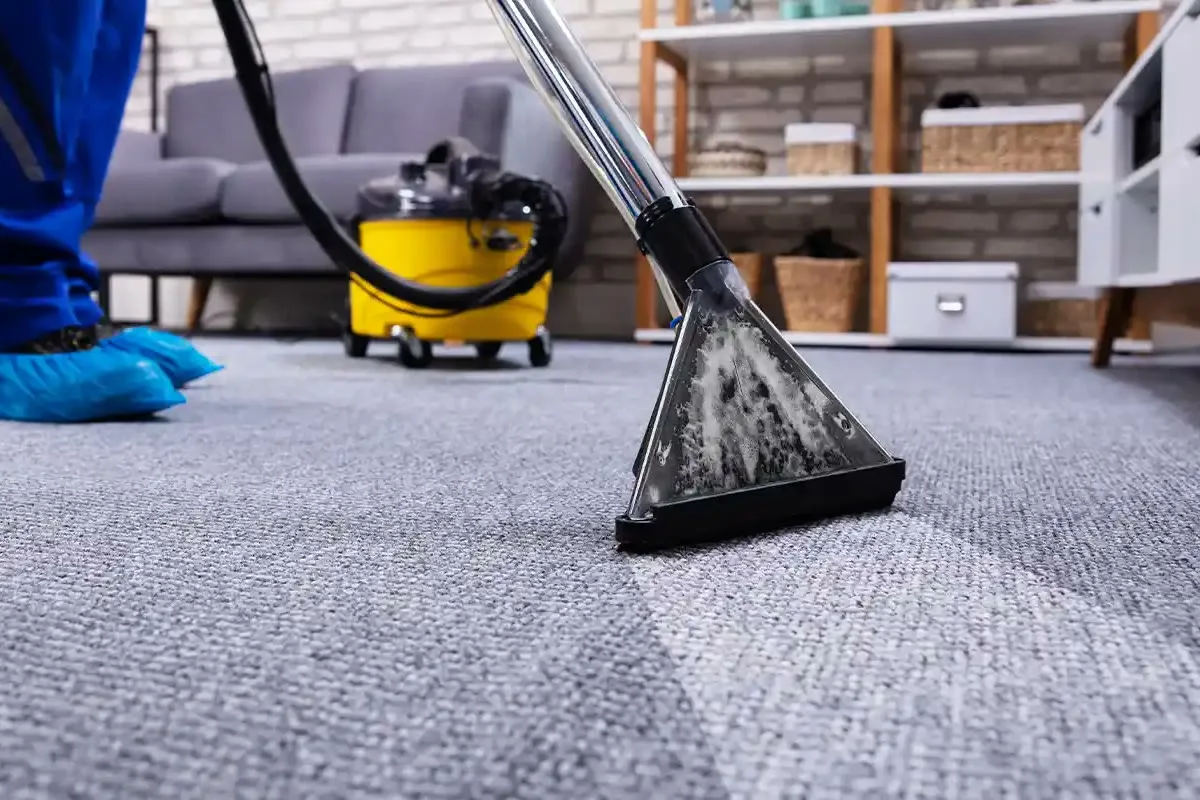
Despite the name, a carpet steam clean does not blow steam into the carpet. The machine sprays hot water mixed with a cleaning solution down into the pile and, a moment later, a powerful vacuum in the same wand sucks that water back up, together with the dirt it has loosened. That is why the trade calls it hot water extraction. The name “steam cleaning” stuck because the hot water gives off a little vapour as it works.
Because the water reaches the base of the fibres and is rinsed out again, this method is good at shifting soil that has been ground deep into the carpet over months of foot traffic, along with dust and old spills that a vacuum cleaner never reaches.
What Low-Moisture (“Dry”) Cleaning Is
Low-moisture cleaning, often sold as dry carpet cleaning, uses a small amount of cleaning solution that is worked into the surface of the pile, usually with a pad or brush, and then removed or vacuumed off once it has done its job. It is not completely dry, as the name suggests, but the carpet only ever gets slightly damp.
The big advantages are speed and safety for delicate fibres: there is very little water to soak into the backing, so there is far less risk of shrinking, browning or slow drying. The trade-off is depth. Low-moisture cleaning freshens the visible part of the carpet well, but it does not flush out heavy soiling at the base of the pile the way extraction does.
Side by Side
| Hot water extraction | Low-moisture cleaning | |
|---|---|---|
| How deep it cleans | Down to the base of the pile | Mainly the upper part of the fibres |
| Drying time | Several hours, depending on airflow | Often one to three hours |
| Best suited to | Wool, wool blends and synthetics | Sisal, seagrass, jute, viscose and some silks |
| Typical use | Heavy soiling, pet accidents, yearly deep clean | Delicate rugs, quick refresh, rooms needed back soon |
Drying always depends on the room as much as the method. Our guide to how long carpet takes to dry after cleaning covers the practical ways to speed it up.
Which Method for Which Carpet
- Wool and wool blends: extraction with a wool-safe solution and controlled temperature. Wool takes it well and comes up noticeably brighter.
- Nylon, polyester and polypropylene: extraction. Synthetic carpets are tough and benefit most from a thorough rinse.
- Sisal, seagrass and jute: low-moisture. Plant fibres swell and can stain brown when they get wet, so we keep water to a minimum.
- Viscose and silk rugs: low-moisture, with care. These fibres lose their shine and can distort if soaked.
- Pet accidents and heavy soiling: extraction, because the contamination has usually soaked below the surface. Our guide on removing pet urine smell from carpet explains why.
- A room you need back the same day: low-moisture, if the fibre and the level of dirt allow it.
Can Steam Cleaning Damage a Carpet?
Hot water extraction is safe for most fitted carpets when it is done properly. Problems almost always come from too much water left behind. An over-wet carpet can shrink away from the gripper rods, natural fibres can turn brown as moisture wicks up from the backing, and a carpet that stays damp for a day or more can start to smell musty. In the worst cases it gives mould the conditions it needs, which is why our guide to mould in carpet puts so much weight on drying.
The other common cause is cleaning solution that is not rinsed out. Residue left in the pile feels slightly sticky and attracts dirt, so the carpet looks grubby again within weeks.
Hired Machines vs a Professional Clean
Supermarkets and DIY shops hire out carpet cleaners that work on the same principle as extraction, only with much less suction. They can be useful for a small, lightly soiled room, but the weaker vacuum leaves more water behind. If you use one:
- Vacuum the carpet thoroughly first, going over it slowly in two directions.
- Check the label and test the solution on a hidden corner before you start.
- Use less detergent than you think you need; too much is the most common mistake.
- Make several dry passes, with the spray off, after each wet pass to pull out as much water as possible.
- Keep windows open or the heating on until the carpet is fully dry.
- Keep hired machines away from natural-fibre and viscose rugs altogether.
How We Choose on the Day
You do not need to pick a method before we arrive. Our team starts by vacuuming and checking what the carpet or rug is made of, then pre-treats any stains and chooses the method that will clean it thoroughly without damaging it. For most fitted carpets that is hot water extraction with our portable machines; for delicate rugs and natural fibres it is low-moisture cleaning. Both are charged at the same room prices, which you can see on our carpet cleaning London page and in our guide to carpet cleaning costs in London.
Steam or Low-Moisture: Your Questions
Is dry carpet cleaning really dry?
Not completely. It uses a small amount of cleaning solution, so the carpet feels slightly damp to the touch for a short time. The difference is that very little moisture reaches the backing, which is why it dries much faster than extraction.
Will steam cleaning shrink my carpet?
A well-fitted wool or synthetic carpet should not shrink when it is cleaned correctly. Shrinkage happens when a carpet is left very wet, especially natural-fibre carpets or ones with a jute backing. Good extraction and fast drying prevent it.
Is low-moisture cleaning enough for a deep clean?
For lightly used rooms and delicate fibres, it gives a good result. For carpets that have not been cleaned for years, heavy traffic lanes or pet accidents, extraction removes far more of the dirt that sits at the base of the pile.
Is a hired carpet cleaner as good as a professional one?
Hired machines use the same idea but have much weaker suction, so they leave more water and detergent in the carpet. They can freshen a small room, but they do not reach the same depth and the carpet takes longer to dry.
Do I need to choose the method myself?
No. We check the fibre and the condition of the carpet when we arrive and recommend the method that suits it. If a rug needs a different approach from the carpet around it, we clean each one in the right way during the same visit.
More on Carpet and Rug Care
- Rug cleaning at home and when it is better left to a professional.
- How long carpet takes to dry after cleaning with tips for faster drying.
- How to get stains out of carpet from coffee to candle wax.
- Carpet cleaning across London including our work in Greenwich.
Not Sure Which Method Your Carpet Needs?
Send us a photo of the carpet or rug and tell us the rooms on WhatsApp, or write to us through our contact form. We will recommend a method and price the job for you.